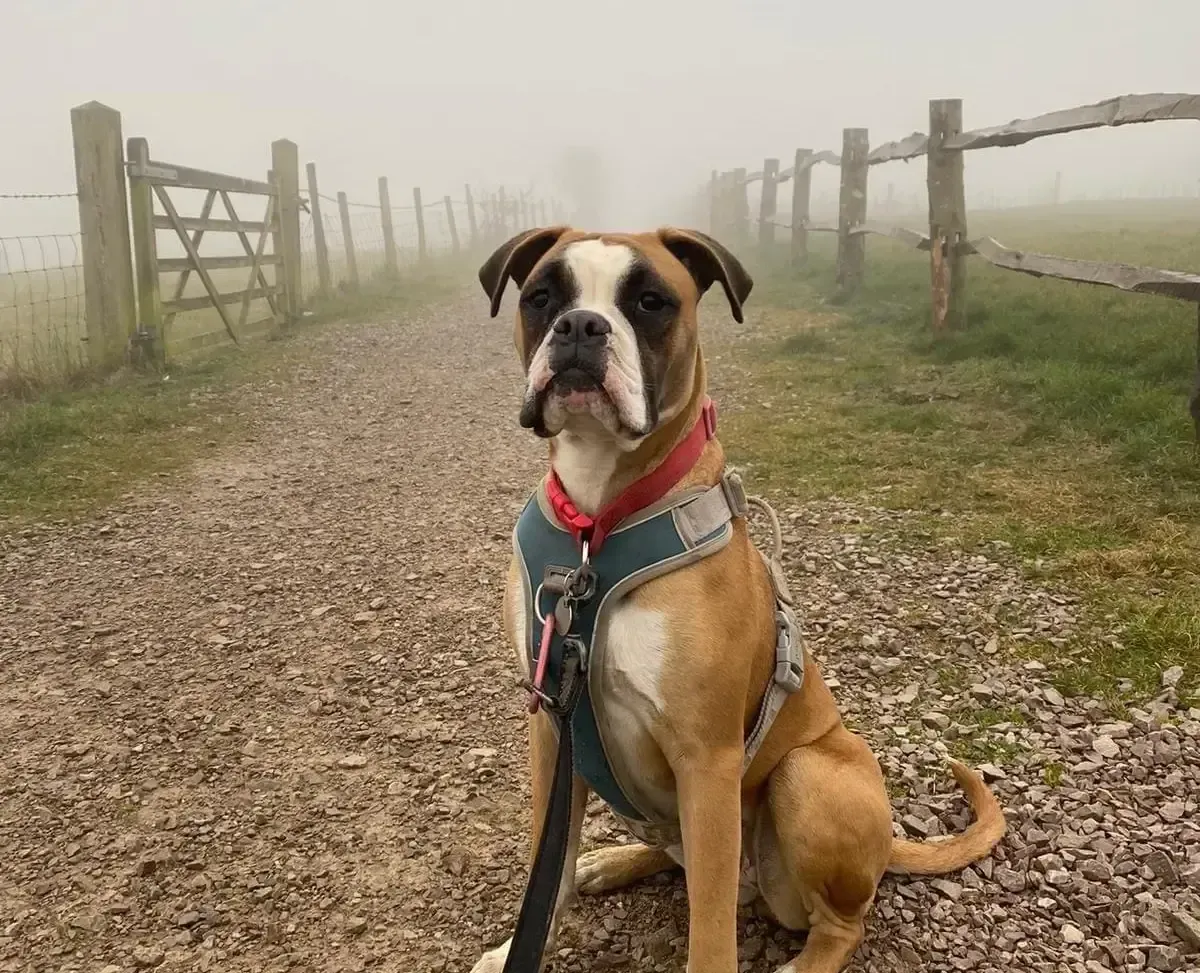
A Fairy Tails trainer walking a dog on a loose lead through the countryside

Free tool · Dog exercise calculator

How much exercise does my dog really need?

Enter your dog’s breed and age for a personalised daily walking guide — for puppies, adults and seniors. Built on Royal Kennel Club and PDSA guidance, with the honest bits marked out.

  • 97 breeds, by name or energy level
  • Adjusts for puppies, adults & seniors
  • Sourced from the RKC & PDSA

Your dog’s daily guide

Work out their walking time

Pick a breed — nicknames work — or choose the energy level that fits, tell us their life stage, and we’ll show a sensible daily target with the cautions that matter for that dog.

1 How would you like to choose?

2 Which breed?

Nicknames work too. Use the up and down arrow keys to move through the suggestions.

3 Life stage

In short

How much exercise does my dog need?

Most healthy adult dogs need between 30 minutes and two hours of walking a day, and the right amount depends mainly on breed and energy level rather than size. As a rough guide, low-energy companion breeds are happy with around 30 to 45 minutes; steady, everyday dogs with 45 to 75 minutes; high-drive breeds with 75 minutes to two hours; and working or herding breeds with two hours or more, plus a job to do. Puppies and senior dogs need less, worked out differently. Split the total across two or more walks, and let your dog sniff and explore rather than route-marching — mental exercise tires a dog as much as distance does, but never replaces getting out. These are general-guidance figures drawn from Royal Kennel Club exercise tiers and PDSA minimums; a dog that is unwell, overweight or recovering should follow its vet’s advice first.

Light

30–45 minutes a day

Short, unhurried walks. Sniffing matters far more than distance.

Steady

45–75 minutes a day

A decent walk or two a day. They will let you know if one gets missed.

High

75–120 minutes a day

Needs proper exercise and something to think about, not a lap of the block.

Very high

120–180 minutes a day

Two hours or more, most days. Distance alone will not settle them.

Every breed, sorted

Dog exercise needs by breed

All 97 breeds in the calculator, grouped by how much they typically need. Tap any breed to open it in the calculator, then set the life stage for puppies and seniors.

Bands are placed on the published landmarks (30, 60 and 120 minutes). A handful of breeds are deliberately banded down where a flat face or a giant frame makes the published figure unsafe as a target — the calculator explains which, and why, when you pick one.

The five-minute rule

How much exercise does a puppy need?

A common rule of thumb is five minutes of formal exercise per month of age, up to twice a day — so about 15 minutes twice daily for a three-month-old, and 30 minutes twice daily by six months. It is a starting point, not a target: it covers lead walks and structured exercise only, because too much impact while the joints are still growing can do lasting harm. Free play and pottering at their own pace are separate, and puppies are good at stopping when they have had enough. Large and giant breeds grow for longer, so their careful period lasts well past a year. It is worth knowing that PDSA disagrees with the five-minute rule, calling it unsupported by evidence and not right for every puppy — so follow your puppy rather than the number, and ask your vet if you are unsure.

Formal exercise a day, by age

The five-minute rule, twice daily

  • 2 mo 20m
  • 3 mo 30m
  • 4 mo 40m
  • 5 mo 50m
  • 6 mo 60m
  • 7 mo 70m
  • 8 mo 80m
  • 9 mo 90m
  • 10 mo 100m
  • 11 mo 110m
  • 12 mo 120m

The calculator caps this at the adult figure for the breed — a small breed reaches its adult amount well before it stops growing. That cap is our own safety logic, not a published rule.

Getting the early weeks right

Exercise is only one piece — socialisation, confidence and habits all set now, in a window that doesn’t come back. Our Puppy School does the work for you full-time, our puppy classes coach you weekly, and our free week-by-week course is there whenever you want it.

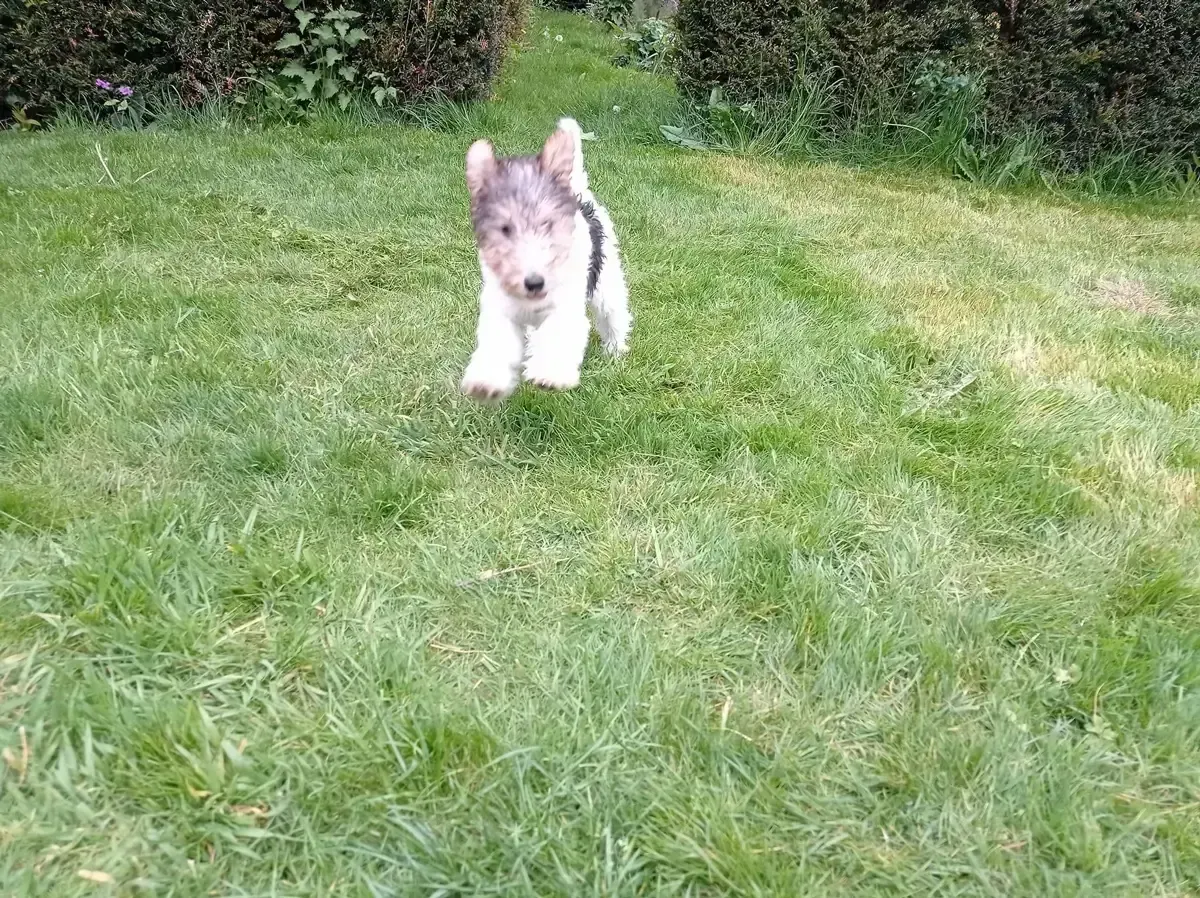
A puppy running back to its handler on a recall

Older dogs: little and often

A senior dog usually wants a little less than they did in their prime, spread across more, shorter walks. Keeping the routine going matters more than the total — joints stiffen when they aren’t used, and swimming is gentle on sore ones. No UK authority publishes an exact reduction, so the senior figure in the calculator is our own reading of the “a little less” advice, offered as a starting point. New stiffness or tiring quickly is a vet matter, not just old age.

Can you do too much?

Yes — and it’s easy to miss. Over-exercising a growing puppy can quietly damage developing joints; flat-faced breeds overheat and struggle to breathe if pushed; and heat is the big one — most canine heatstroke follows over-exercising or a hot day. In warm weather, walk in the cool of the morning or evening and cut the distance. When in doubt, watch the dog in front of you rather than the number.

Honest about the numbers

Where these figures come from

Breed exercise levels are based on published guidance from The Royal Kennel Club , which lists a daily exercise tier for every breed it recognises, and PDSA, which publishes a minimum daily exercise figure on its breed pages. Where the two differ we have used our own judgement, and the ranges shown here are ours rather than either organisation’s.

The puppy figure uses the Royal Kennel Club’s rule of thumb of five minutes of formal exercise per month of age, up to twice a day, until the puppy is fully grown. It is worth knowing that PDSA disagrees with it: they state that “there’s no scientific evidence behind this rule, and although it might work for some, it’s not appropriate for most puppies”. Treat it as a starting point and follow your puppy rather than the number. We cap the figure so it never exceeds what an adult of the same type would need; that cap is our own safety logic and is not published anywhere.

No organisation publishes a numeric reduction for senior dogs. The published advice is qualitative: PDSA says an older dog may need “a little less” and that “little and often is best”. The reduction applied above is our own interpretation of that, offered as a starting point. The part that is well supported is splitting the time into shorter, more frequent walks.

Exercise is also the single most common cause of heatstroke in dogs. The Royal Kennel Club reports that around three quarters of cases follow over-exercising or exercising on a hot day, so in warm weather walk early or late and cut the distance.

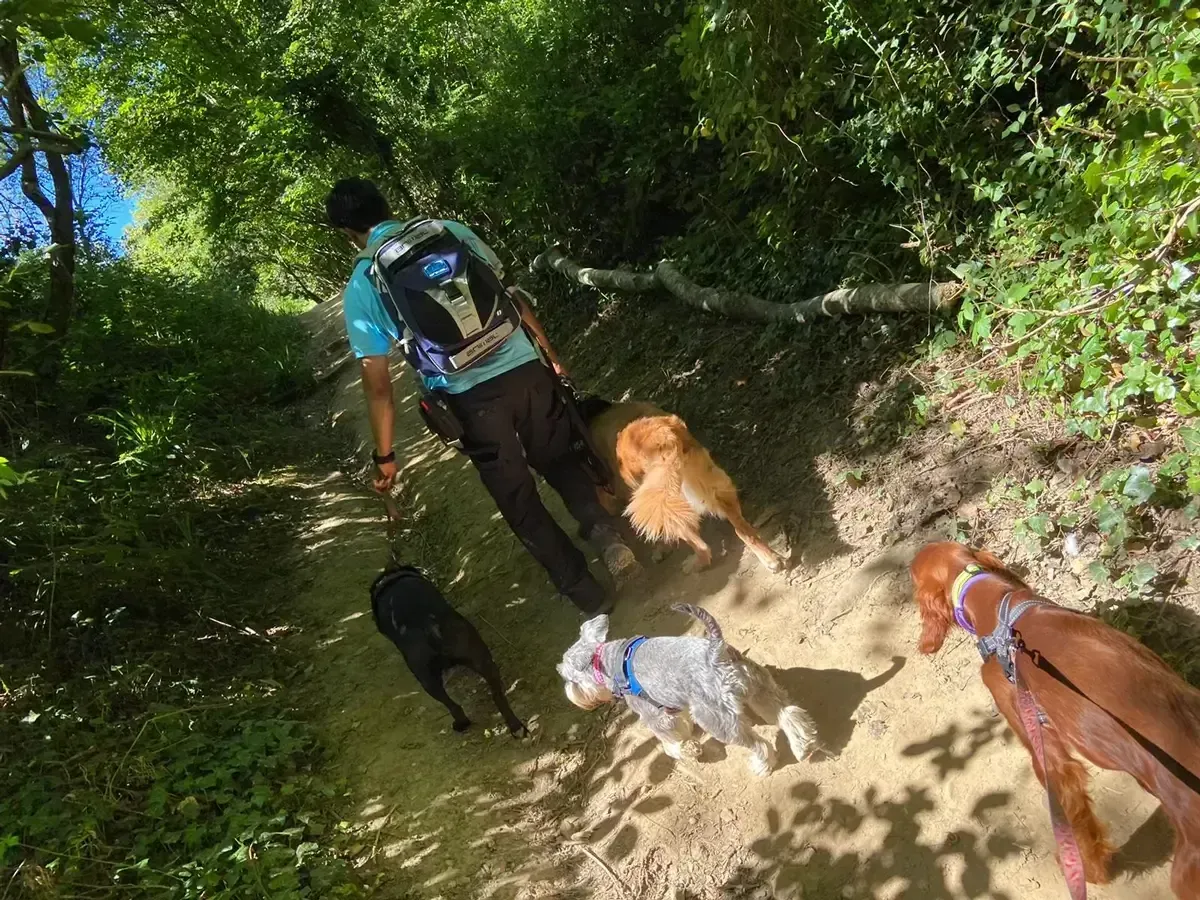
This is general guidance, not veterinary advice. Every dog is an individual, and breed is only one factor alongside age, weight, fitness and health. If your dog is unwell, recovering, overweight, or you are unsure how much exercise is safe for them, speak to your vet, whose advice should always come first.

Compiled and reviewed by Kamal Singh and the training team at The Fairy Tails K9 Centre, a 5-star Hastings Borough Council–licensed centre (licence WK/202503477).

Good to know

Dog exercise questions

How long should I walk my dog each day?

For most healthy adult dogs, somewhere between 30 minutes and two hours, split across two or more walks. The right figure depends far more on breed and energy level than on size: a Pug and a Border Collie are worlds apart. Enter your dog above for a personalised guide, and let them sniff and explore rather than route-marching — a slow, nose-led walk does more good than a brisk lap.

Can you over-exercise a dog?

Yes. Growing puppies are the biggest risk — too much hard, repetitive exercise while the joints are developing can do lasting harm, which is why a puppy’s budget is worked out from their age. Flat-faced breeds overheat and struggle to breathe if pushed, and older dogs tire sooner. Exercise is also the most common cause of heatstroke in dogs: the Royal Kennel Club reports around three-quarters of cases follow over-exercising or a hot day, so in warm weather walk early or late and cut the distance.
How much exercise does a senior dog need?

A little less than they needed as a healthy adult, and spread across more, shorter walks — “little and often”. No UK authority publishes an exact reduction, so the figure the calculator shows for a senior is our own interpretation of that qualitative advice, not a sourced number. Keeping the routine going matters more than the total, because joints stiffen when they are not used. If an older dog tires quickly, moves awkwardly or seems stiff, see your vet rather than pushing on.

Does mental stimulation count as exercise?

It genuinely tires a dog out, and it matters most on days when walks are shorter — but it is an addition to walking time, not a substitute for it. PDSA and the Royal Kennel Club are both explicit that a garden or a puzzle feeder does not replace getting out. Good options: sniffing on walks, scatter feeding and snuffle mats, a few minutes of reward-based training, varying the route, and chews or licking, which are calming rather than just occupying.

Is a walk enough for a high-energy or working breed?

Often not on its own. Working and herding breeds — Collies, Malinois, Spaniels from working lines, and the like — need something to think about as well as distance to cover. Without a job they tend to invent one, and it is rarely one you would have chosen. Scent work, training, and structured play alongside the walking settle them in a way that raw mileage does not.

Where do these figures come from — are they reliable?

Breed levels are based on the Royal Kennel Club’s per-breed exercise tiers and PDSA’s minimum-exercise figures, cross-checked breed by breed. Three things are our own editorial judgement, and the page says so plainly: the four minute-ranges, the puppy cap at the adult figure, and the senior reduction. The puppy five-minute rule is the Royal Kennel Club’s, and we note that PDSA disagrees with it. It is a well-researched starting point, not veterinary advice — every dog is an individual, and your vet’s guidance always comes first.

When the walk isn’t the whole answer

A tired dog is a happy dog — we can help

Sometimes the honest answer is “more than one person can fit into a day”. We’re a 5-star licensed dog-training centre near Hastings, and we work with families across the South of England and London.

A dog being trained and exercised in a busy country park

Not enough hours in the day?

If your dog needs more than home life can give — the high-energy and working breeds especially — structured days at our Dog Day School burn body and brain, so they come home settled.

Dog Day School

A clever dog that needs a job

When walks alone will never be enough, our residential Board & Train builds the focus and off-switch that turn a busy dog into an easy one to live with.

Board & Train

Getting a puppy started right

Early exercise, socialisation and habits set the whole course. Our Puppy School does the heavy lifting for you — or start our free week-by-week course today.

Puppy School

Live in London or a flat? A city dog’s exercise looks different — busier streets, less green space, more to get used to. See how we help London dogs settle and train, or find the right dog for your life with our breed matcher.

Talk to a trainer

Not sure what your dog needs?

Tell us about your dog and what’s going on, and we’ll point you to the right kind of help — no hard sell.

What would you like help with? (tick any)

Prefer to talk first? Call us on 01424 300668 or WhatsApp us on the same number.

This page was last reviewed and updated .