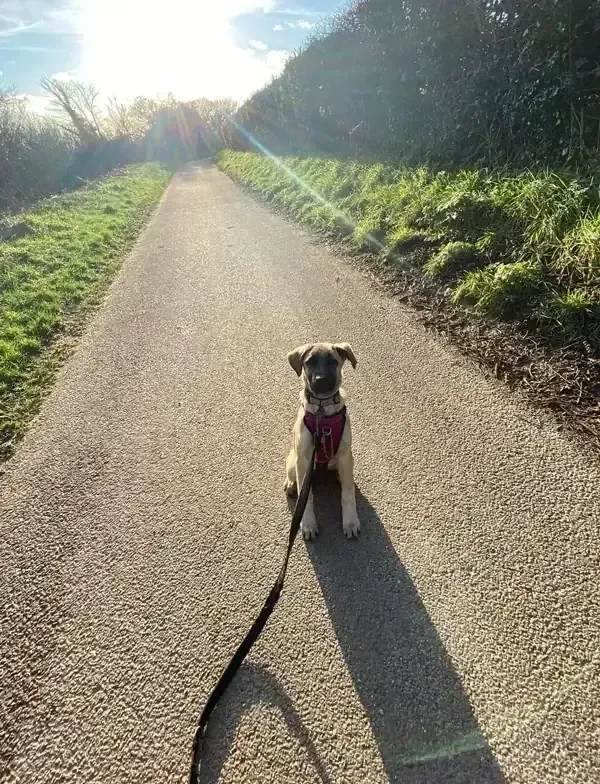
Your dog boards and trains with us — we do the hard work, and you get back a dog you
can take anywhere, and the calm, joyful walks you've been dreaming of.
You love them to bits — but the pulling, the barking, the lunging at other dogs… it's
exhausting. You're not a bad owner, and your dog isn't a bad dog. These are the issues
we deal with day in, day out:
Pulling on the lead
Toilet training
Social skills
Reactivity
Barking at the door
General or trigger based anxiety
Excessive play biting
Growling or biting
Crate training
Prey drive
Hyperactivity
Other forms of issues
If your dog's problem isn't listed here,
please ask us
— we may well be able to help.
School in session
5 STAR RATED
By Hastings Borough Council for dog care
Licensed premises · Licence No. WK/202503477
Care within a regulated framework
Board & Train means your dog boards with us — and boarding dogs is a licensed
activity, not something anyone can simply set up and offer. We are a premises
licensed and inspected by Hastings Borough Council, operating under the Animal
Welfare (Licensing of Activities Involving Animals) Regulations 2018 and government
welfare guidance. Council inspectors visit, assess and award every licensed premises
a star rating — and we hold the highest one there is:
5 stars.
That means the standards behind your dog's stay — housing, supervision, records,
enrichment and welfare — are independently checked, not just promised.
The programme
A boarding school for dogs and puppies
At The Fairy Tails we offer intensive dog training in the form of a training boot camp:
your dog boards and trains with us for assured results. We take the stress out of
training by doing it for you — giving your dog the greatest possible start, then handing
you a simple training schedule so you can spend more time enjoying your dog, comfortable
taking them wherever you go.
A positive environment
Your dog lives with us in our house and at our daycare while undergoing daily
training — a totally customised routine that can greatly impact behaviour in as
little as three to four weeks. It's hard to choose who to trust with your cherished
family dog: our knowledgeable trainers use positive techniques in a loving, safe and
secure environment.
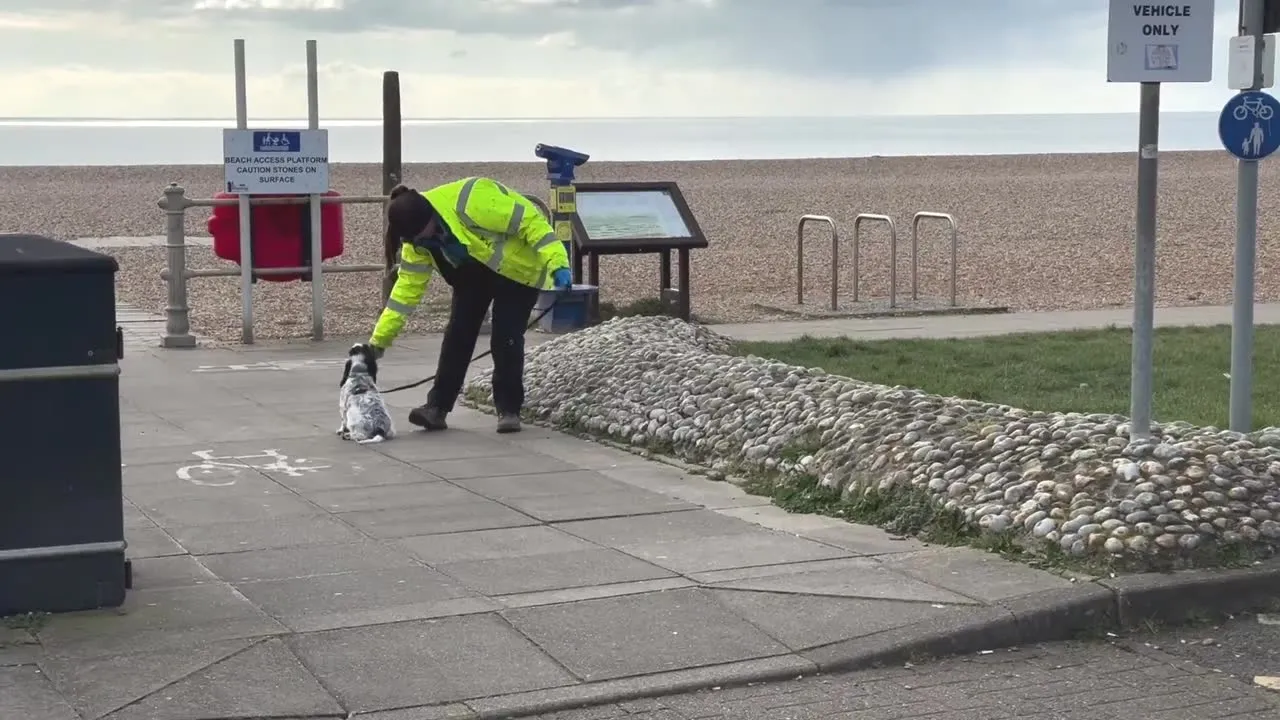
We do the hard work
The key to dog training is consistency, regularity, and a controlled, supervised
environment — difficult for busy families. If your schedule doesn't allow for
training, if past attempts or other trainers haven't worked, or if you simply don't
want to do it yourself, this is your programme.
Your dog stays with us
There are no kennels at our house. Your dog is evaluated, given time to adjust, and
lives here with us — becoming our pet for a period agreed between you and the
trainer, based on your dog's issues and your wishes. Our clients come from all over
the UK and trust us with their fur children.
All breeds are welcome, and we train pups from as young as twelve weeks — as long as
they've had their second set of vaccinations. There is never a wrong time!
Proof, not promises
We'll never sell you a guaranteed fix
No honest trainer can. What we can show you is how we actually work, every single day.
Archie's story
Why we'll never promise you a quick fix
Archie, a young Labradoodle with severe separation anxiety and big feelings around
other dogs, responded beautifully to positive reinforcement training. His story is
also an honest lesson in why a family's follow-through matters as much as ours — and
why "guaranteed results" from any trainer should be a red flag. Read it before
choosing a trainer. Including us.
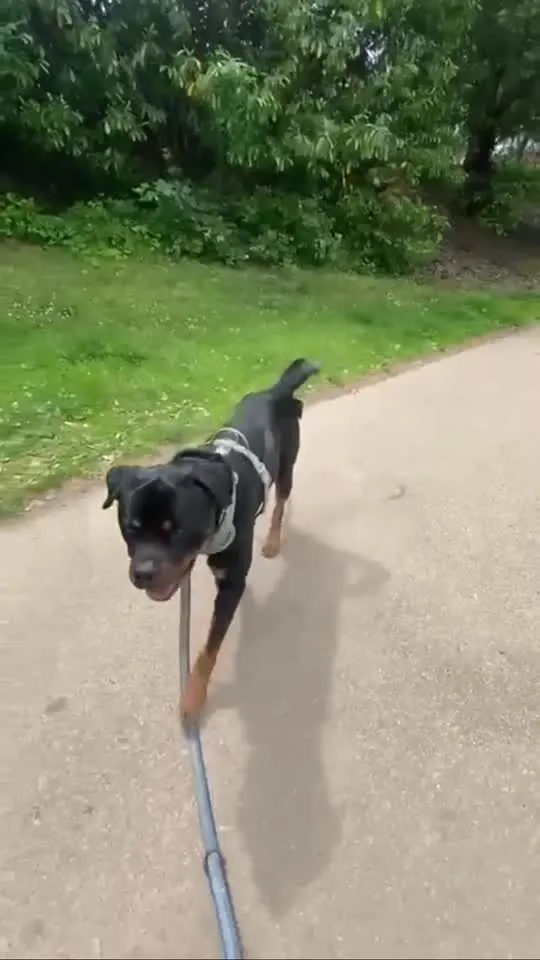
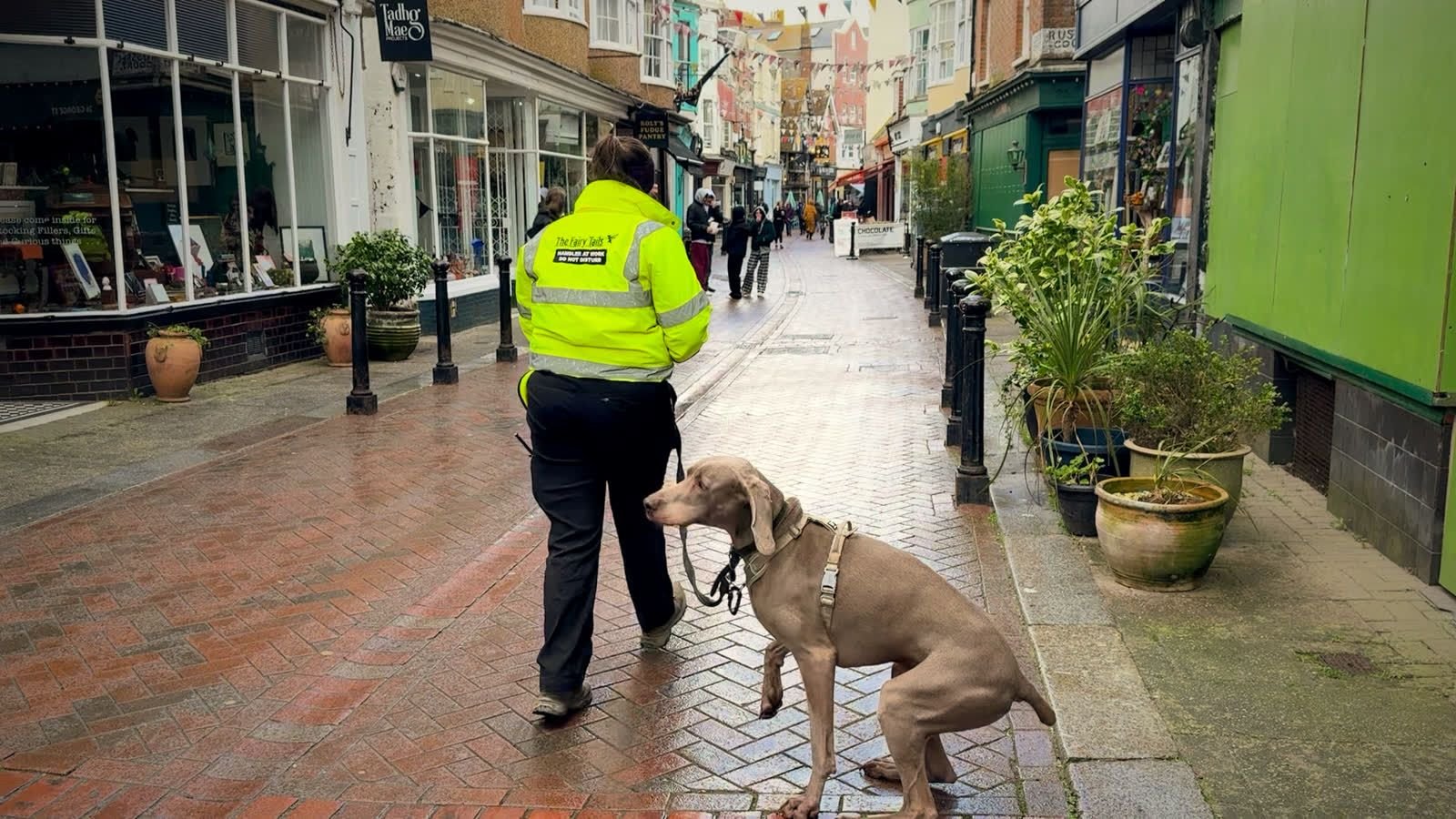
A real training session, start to finish — through the streets, seafront and cafés
of Hastings. Busy pavements, traffic, other dogs: this is exactly the real world
your dog learns to be calm in. Press play — this is the proof.
Just some of our lovely doggy clients
Drag to explore ⟷
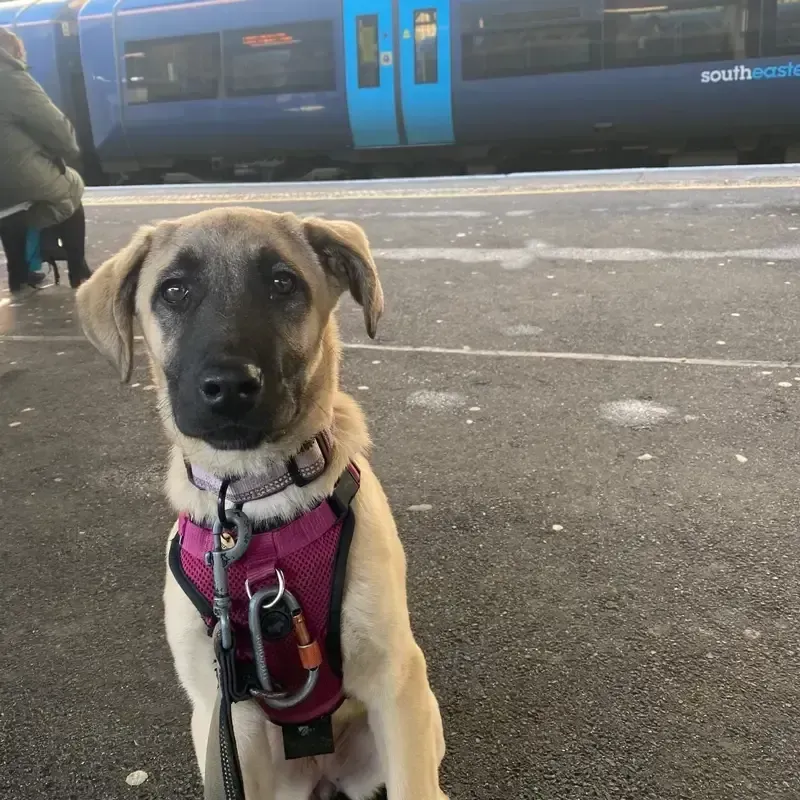
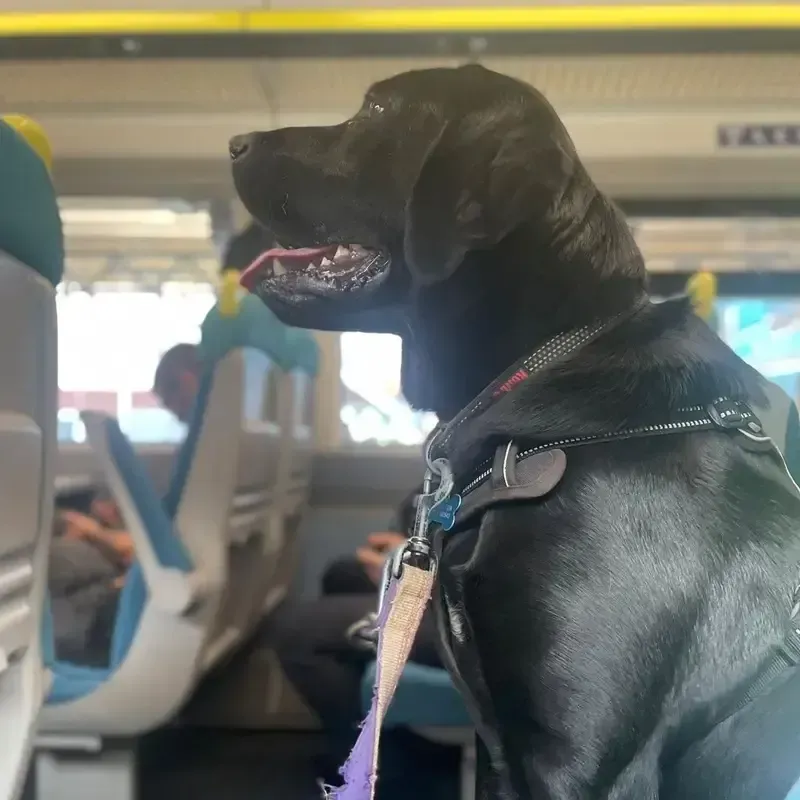
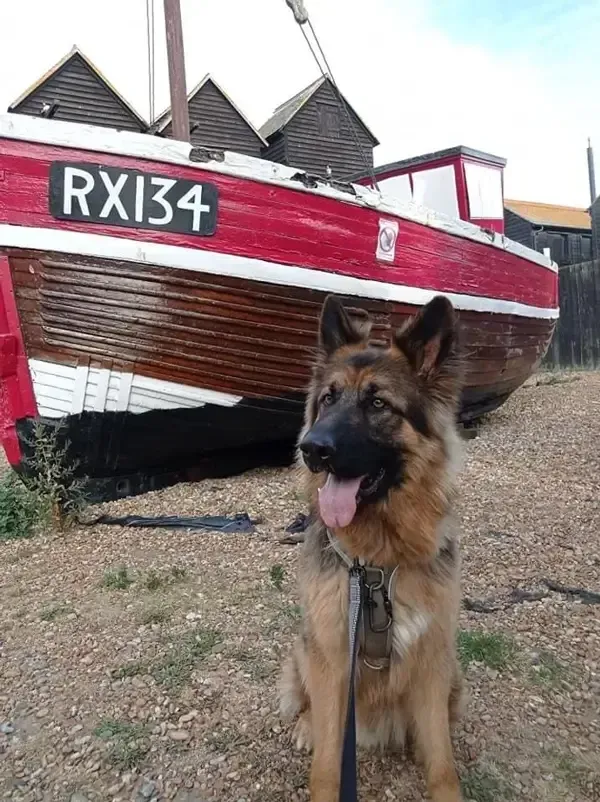
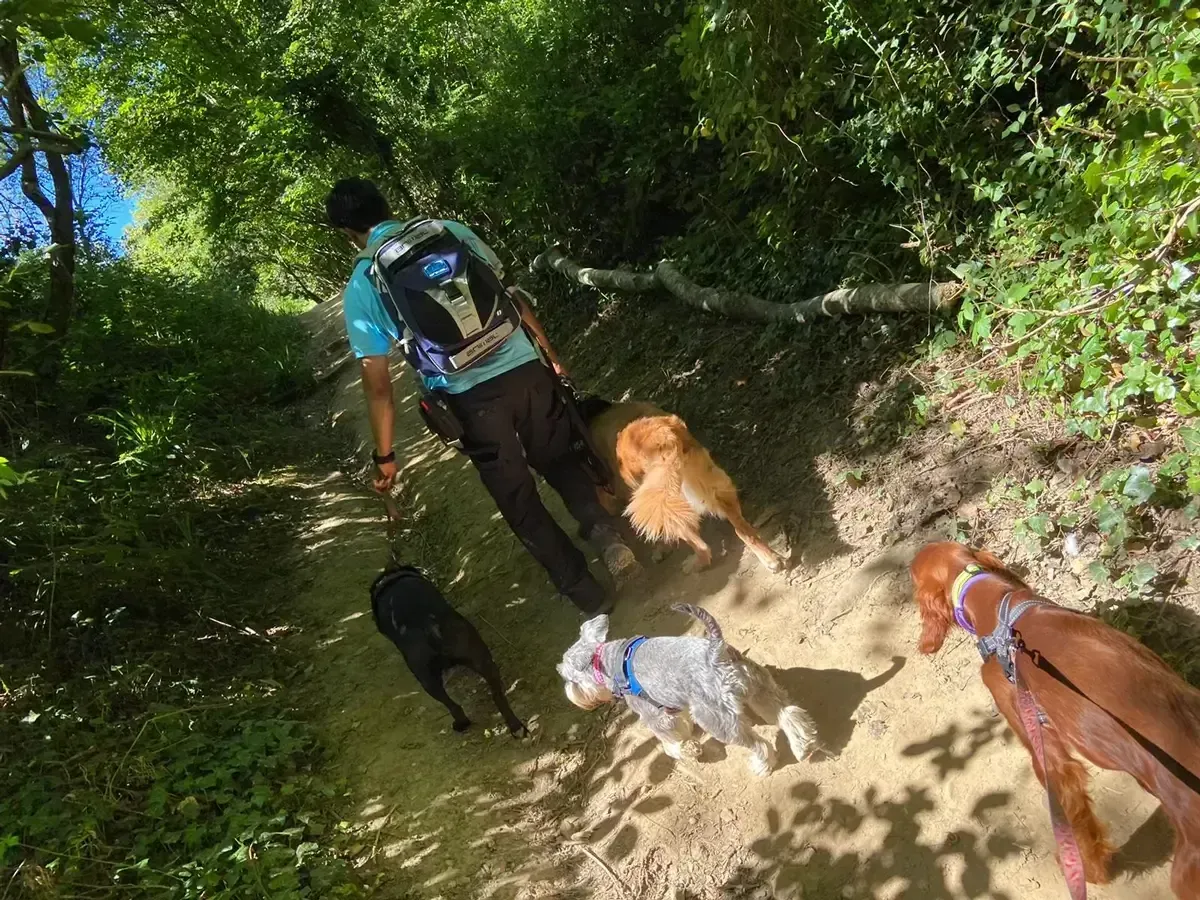
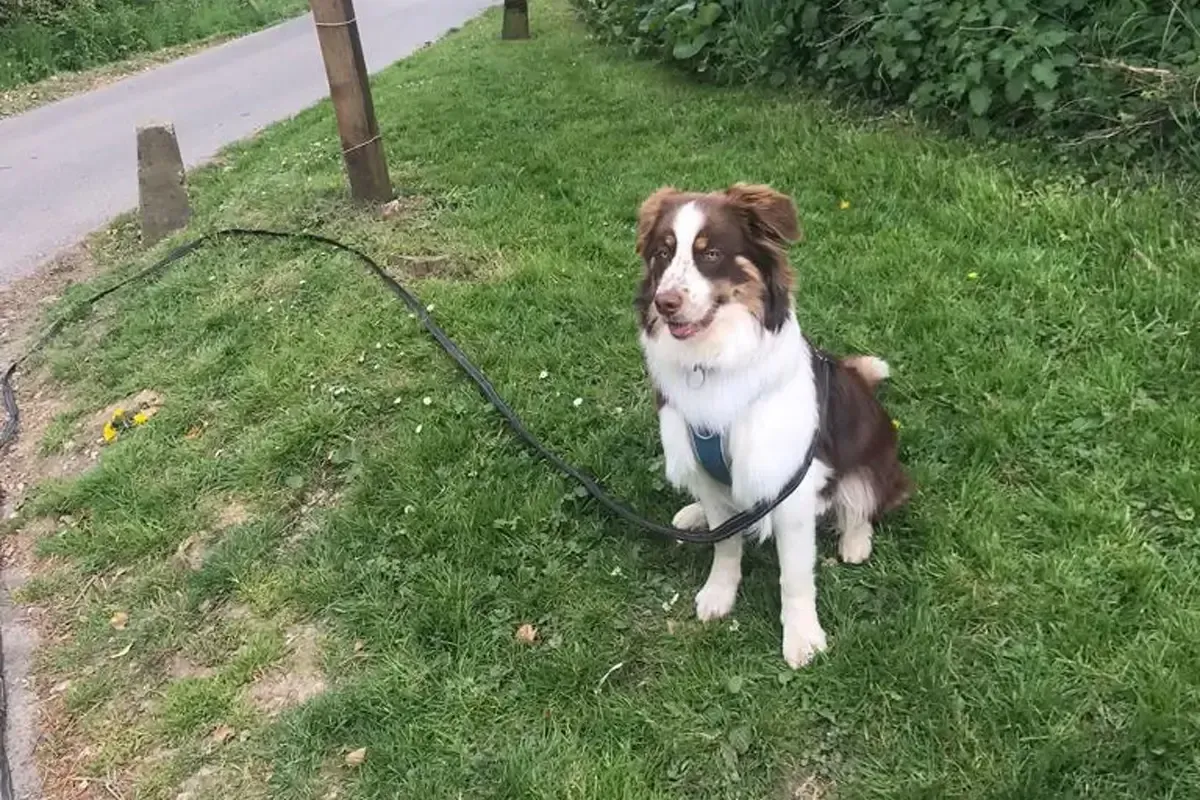
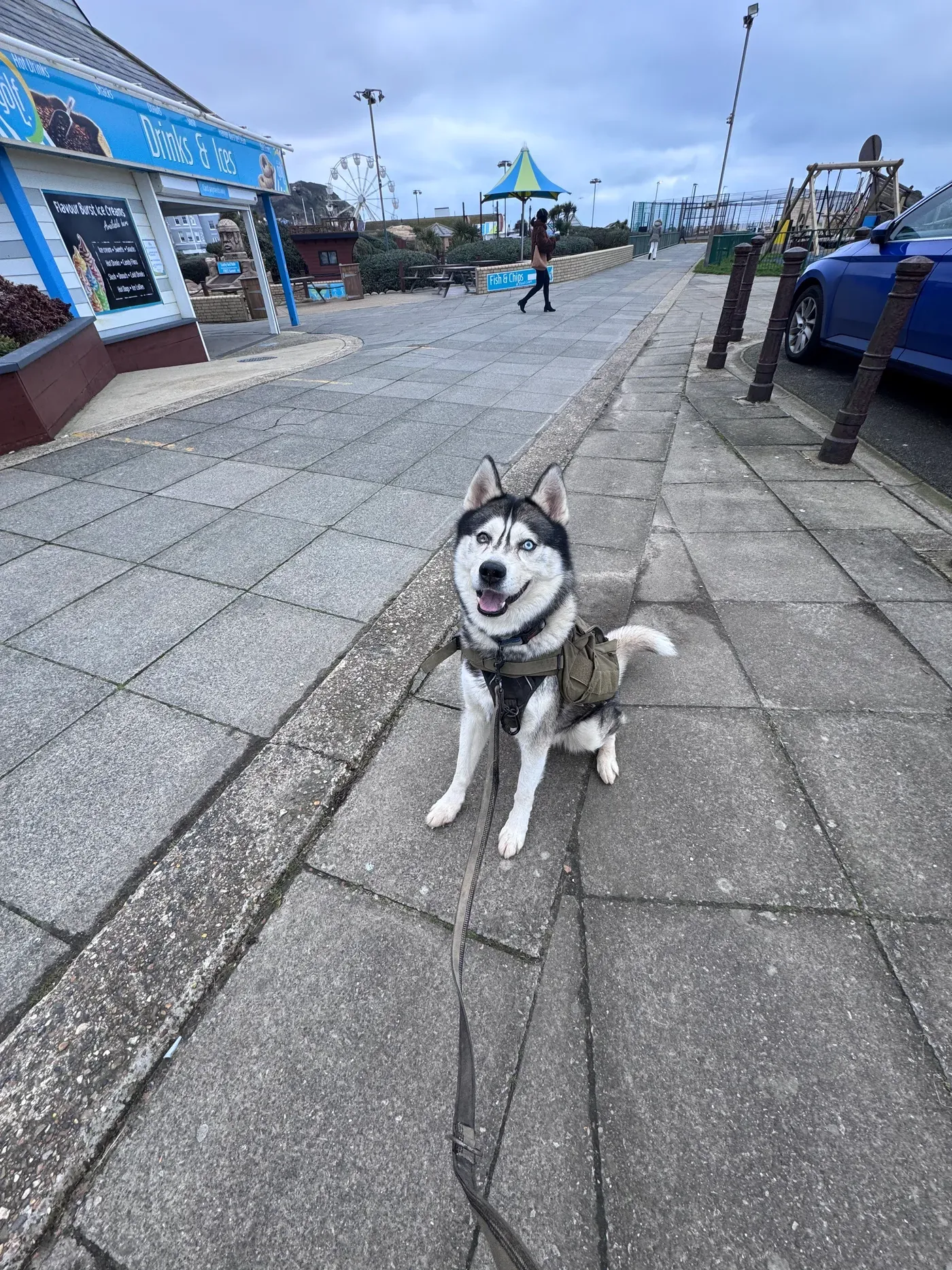
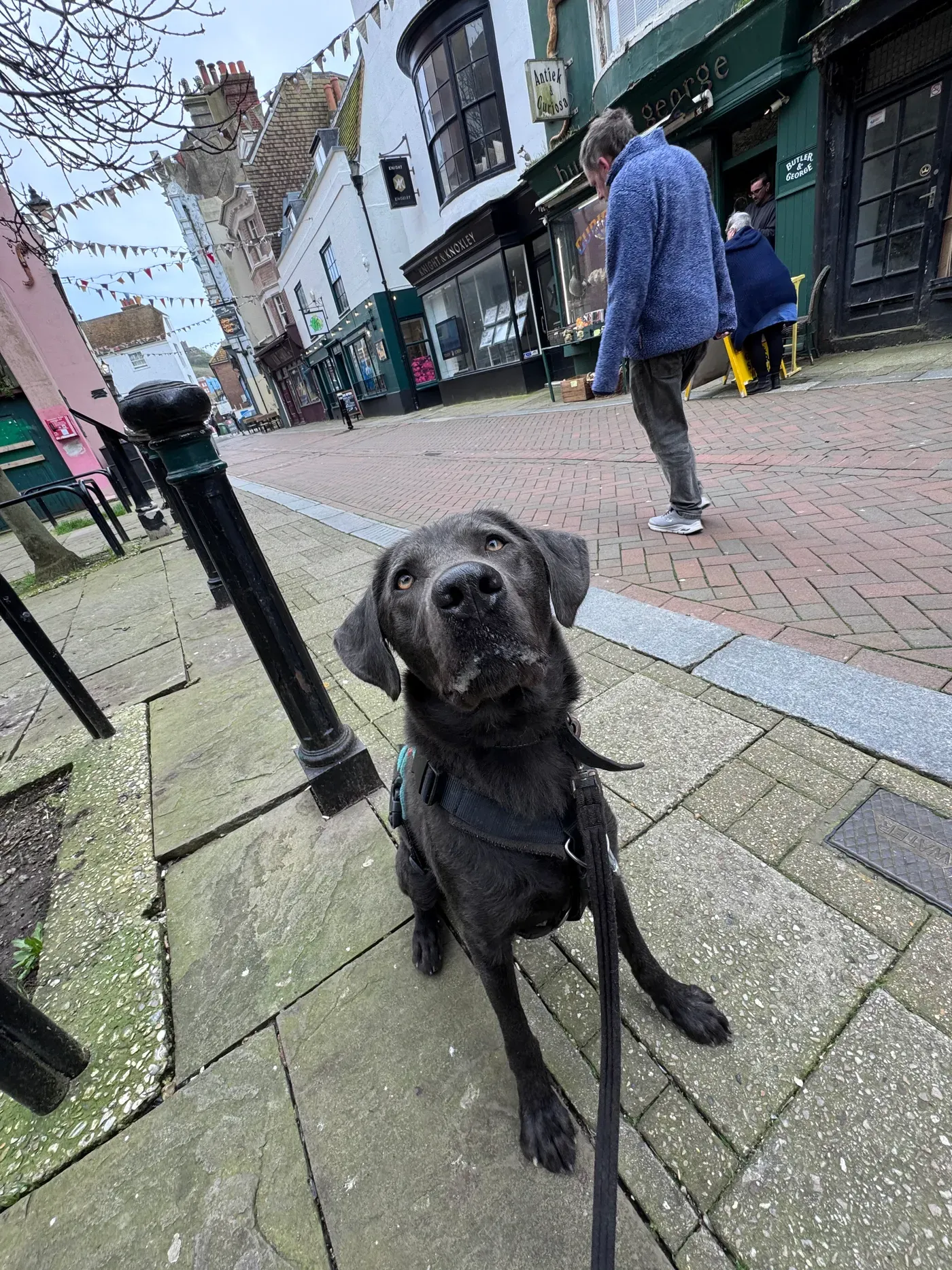
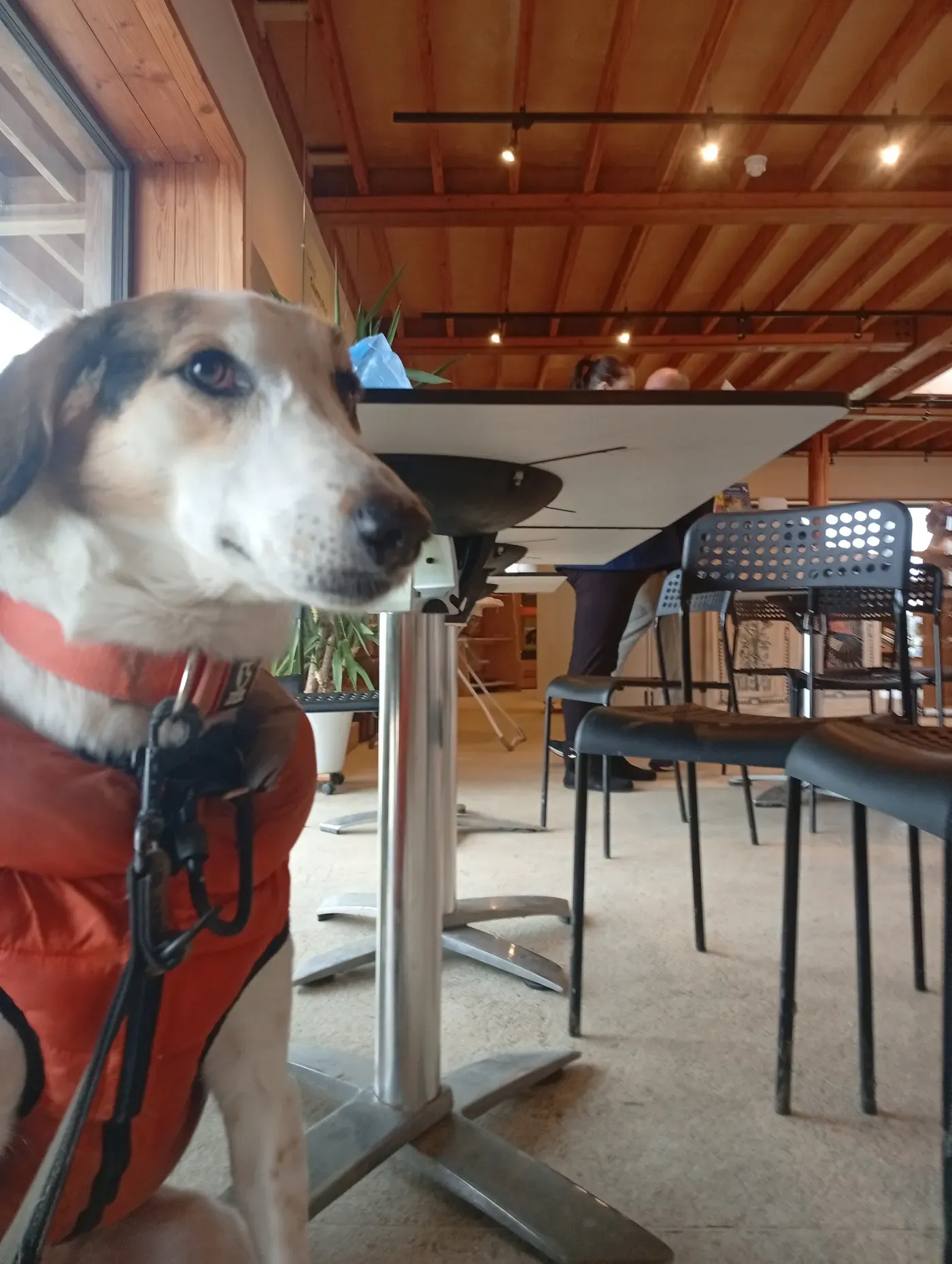
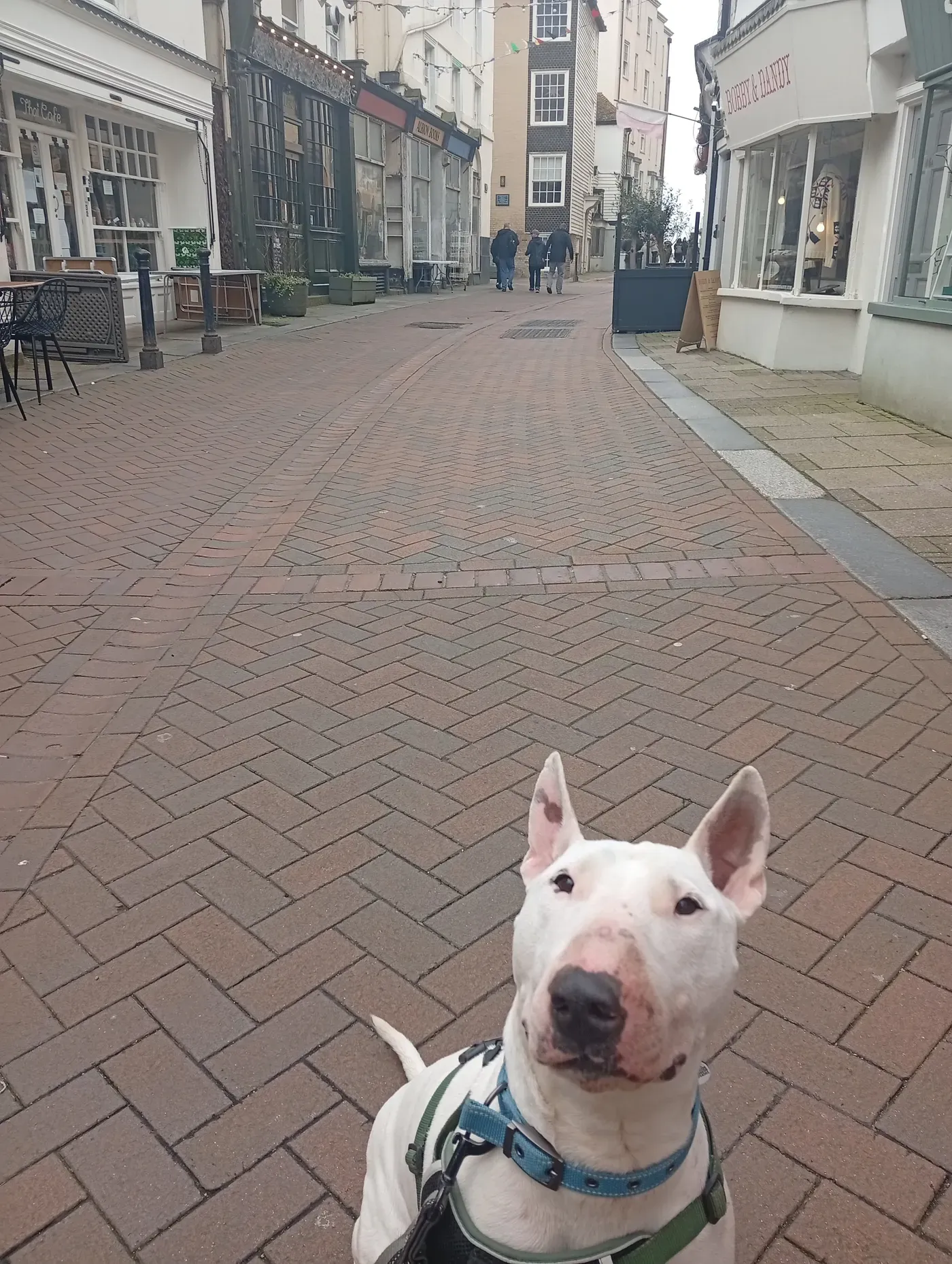
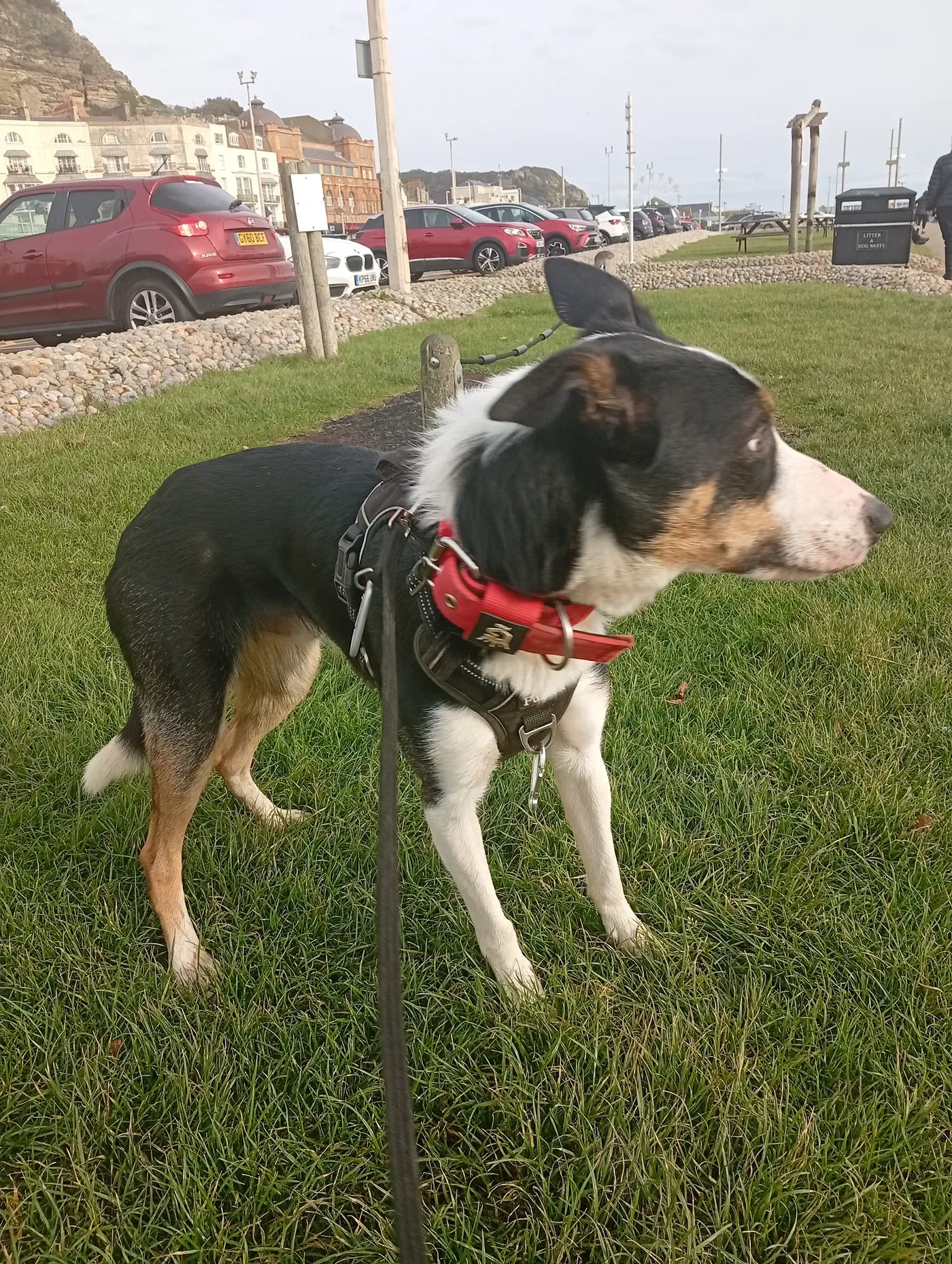
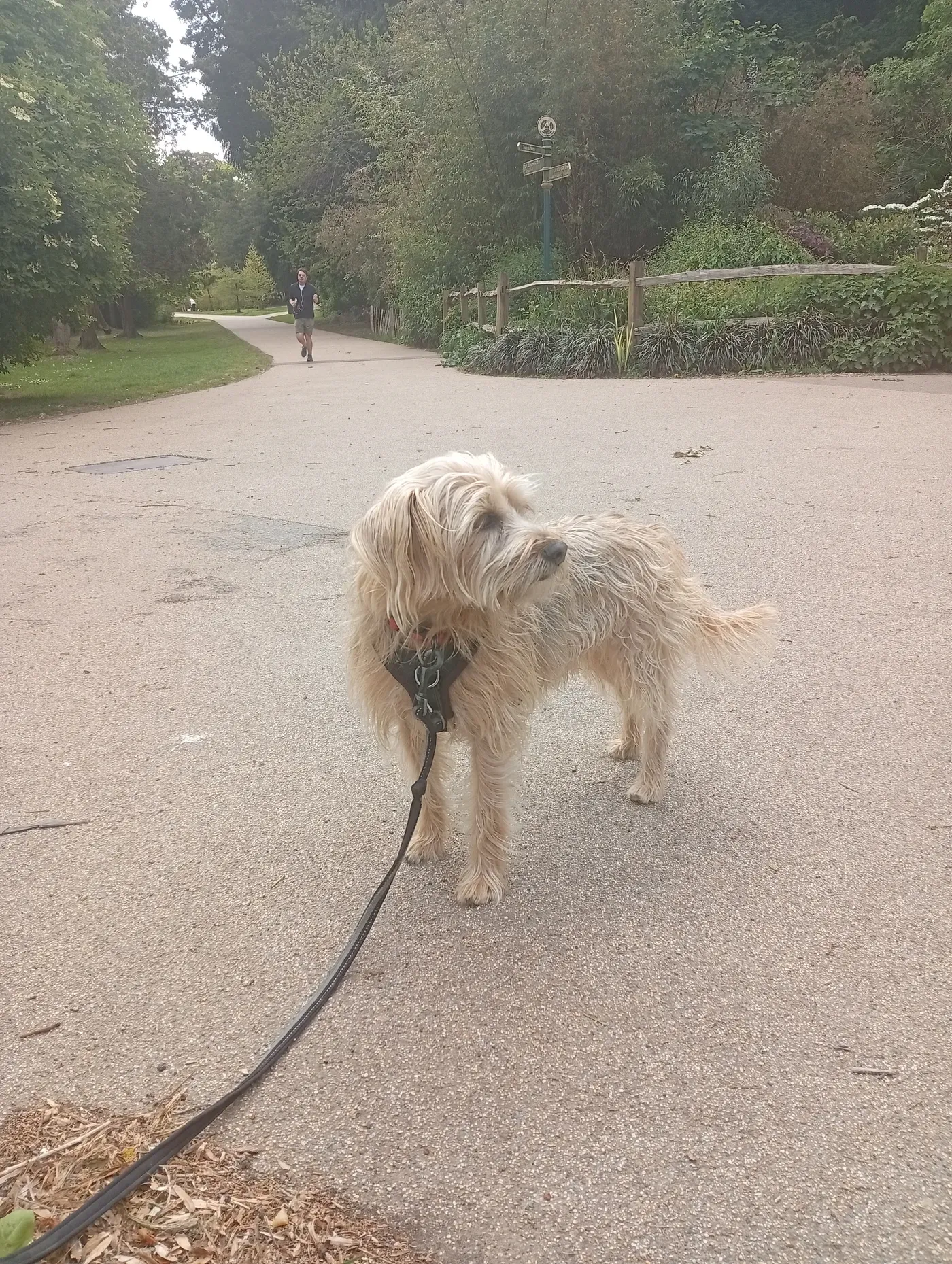
Residential Puppy Training In town training All breeds welcome It's not all hard work! Focus, even mid-adventure Start them young Max, a steady sit on the high street Neo, calm on a busy street April, settled at the café Rigsby, focused in town Diego, relaxed by the seafront Bay, settled as a runner passes
What our families say
Real words from board-and-train families are coming here.
Before & after
Side-by-side transformations — reactive on lead to calm in town — are coming here.
The journey
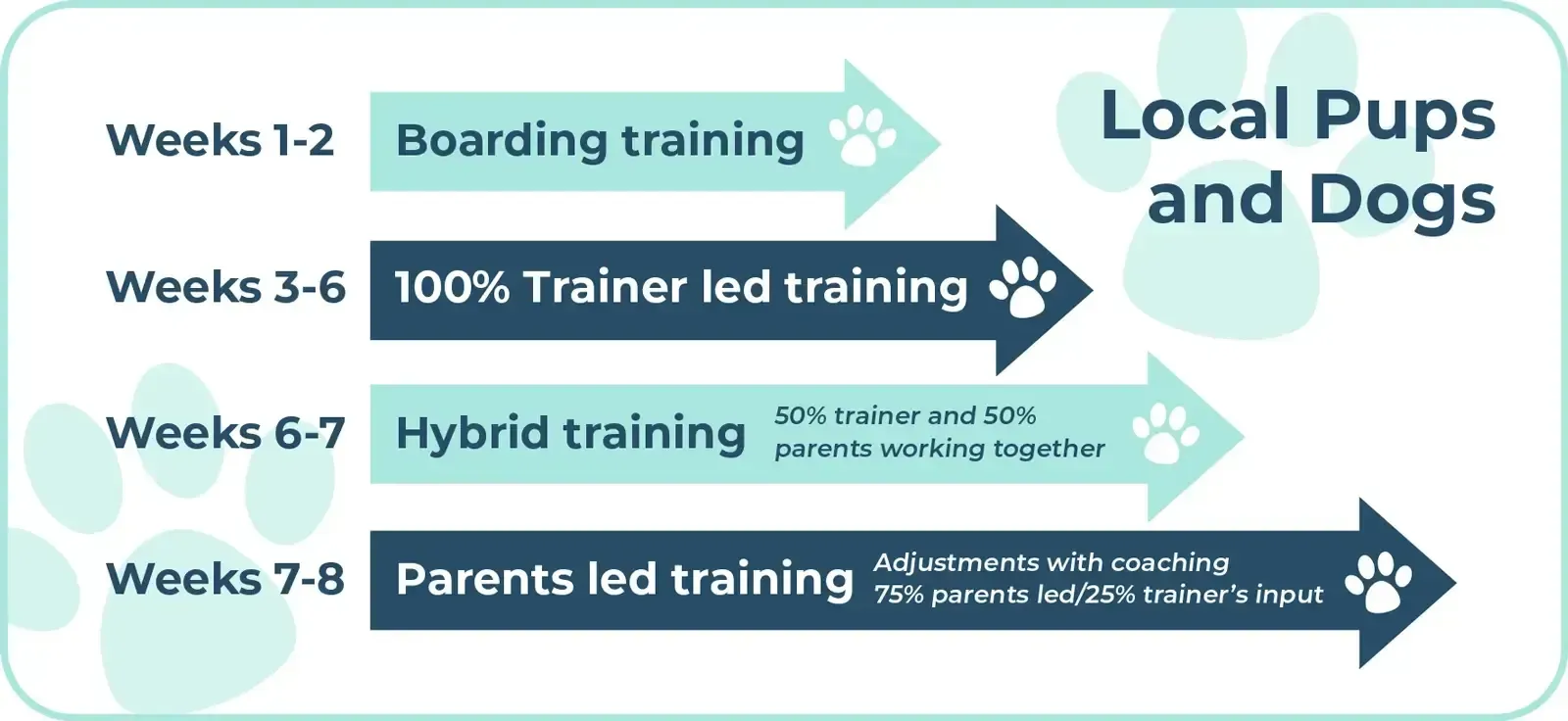
What the weeks look like
Every dog's plan is tailored with you before they arrive — but here's the typical shape
of a full course for an adult dog.
Week 1
Settling in
Your dog moves in, meets the household and our daycare crew, and builds a routine. Integration comes first — a relaxed dog is a dog who can learn.
Week 2
Back to basics
Essential commands and calm behaviours, taught in the quiet around the barn — space and tranquillity, no distractions.
Weeks 3–4
Building up — and parent training begins
Skills get stronger and real-life situations are layered in. From week 4, parent training starts: Friday sessions where you learn to speak your dog’s new language (pick-up between 11am and 2pm).
Mid-course
A week off at home
Dogs must have a week off — rest is part of learning. Your dog comes home, practises living with you, and you see the progress first-hand. Where logistics allow, dogs also benefit from weekends at home.
Weeks 5–7
Specialised training
Out into the real world: on-lead at local dog parks, along the seafront promenade and through busy high streets — wherever your dog’s plan needs us to be.
Weeks 8–9
Individual training & handover
The last pieces are tightened up one-to-one, and we transition your dog back to you — with mid-course and end-of-course parent sessions so you’re confident carrying it on.
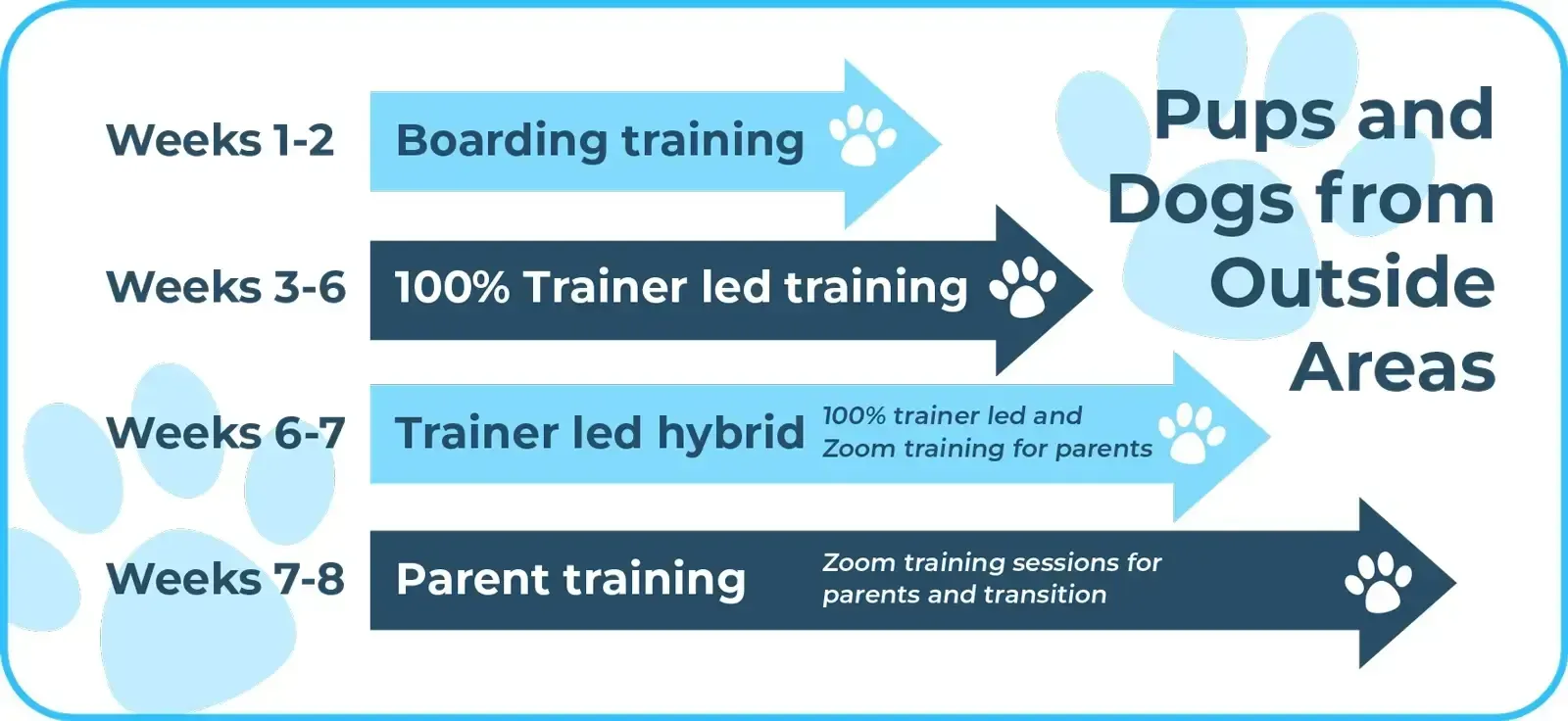
Puppies are different: pups aged 12–16 weeks run
a shorter 4-week course (with a transition week after) — at that age they're a blank
canvas, and four weeks sets a great foundation.
The boarding training cycleOutside-areas training cycle
Parents learning the ropes at handover
Please note — your involvement is the most important part
We can lay the strongest possible foundation, but lasting change is a partnership.
Your dog comes home with new skills and a simple schedule to keep them — and the
families who follow through are the ones whose dogs keep blossoming.
It's why parent training is built into the course from week 4, why we recommend the
mid-course and end-of-course sessions, and why we published Archie's story for every
prospective client to read.
Local, and happy to bring your dog in each day? The same training without overnight boarding
is our Intensive Dog Training.
From further afield
Coming from London? We'll come to you
Board & Train families join us from right across London and the South of England —
and you don't need to do the motorway runs. We offer door-to-door pick-up and drop-off
for boarding dogs: we collect your dog from your home at the start of the course, and
bring them back to you when they graduate.
1
Tell us your postcode
We'll send your exact door-to-door figure along with your dog's programme plan.
2
We collect your dog
Your dog travels door to door with our own team — from your home straight to the barn.
3
Home again at graduation
When the course wraps up, we bring them back to your door — ready to show you what
they've learned.
Straight talk
Our limitations — we'll always be straight with you
We cannot change your dog's character. When it comes to learning, dogs are similar to
human children: we can teach anxious dogs numerous coping skills and resilience
techniques, but a naturally reserved or shy dog will always be naturally reserved or
shy. It's impossible to transform a frightened dog into a joyful, bouncy one in eight
weeks — promising that would be unrealistic, so we won't. What we can do is
help with the long list of behavioural issues above, and be honest with you about
everything else.
Is it suitable for all dogs? Almost!
Puppies
Puppies between twelve and sixteen weeks can do less than eight weeks — they're a
blank canvas for learning. A four-week course is plenty to set a great foundation.
Adult dogs
Dogs older than sixteen weeks must do the full eight-week course, with one week's
break. We can't train in less than eight weeks due to latent inhibition. We only use
positive training and never use aversive tools.
Rescue dogs
Due to complex histories and often deeply ingrained survival behaviours, boarding
training is only suitable in limited cases. Please call us to confirm.
Open doors
An open door — and proof of progress every day
You are welcome to visit your dog whenever you like. No
appointments, no awkwardness — they're your family.
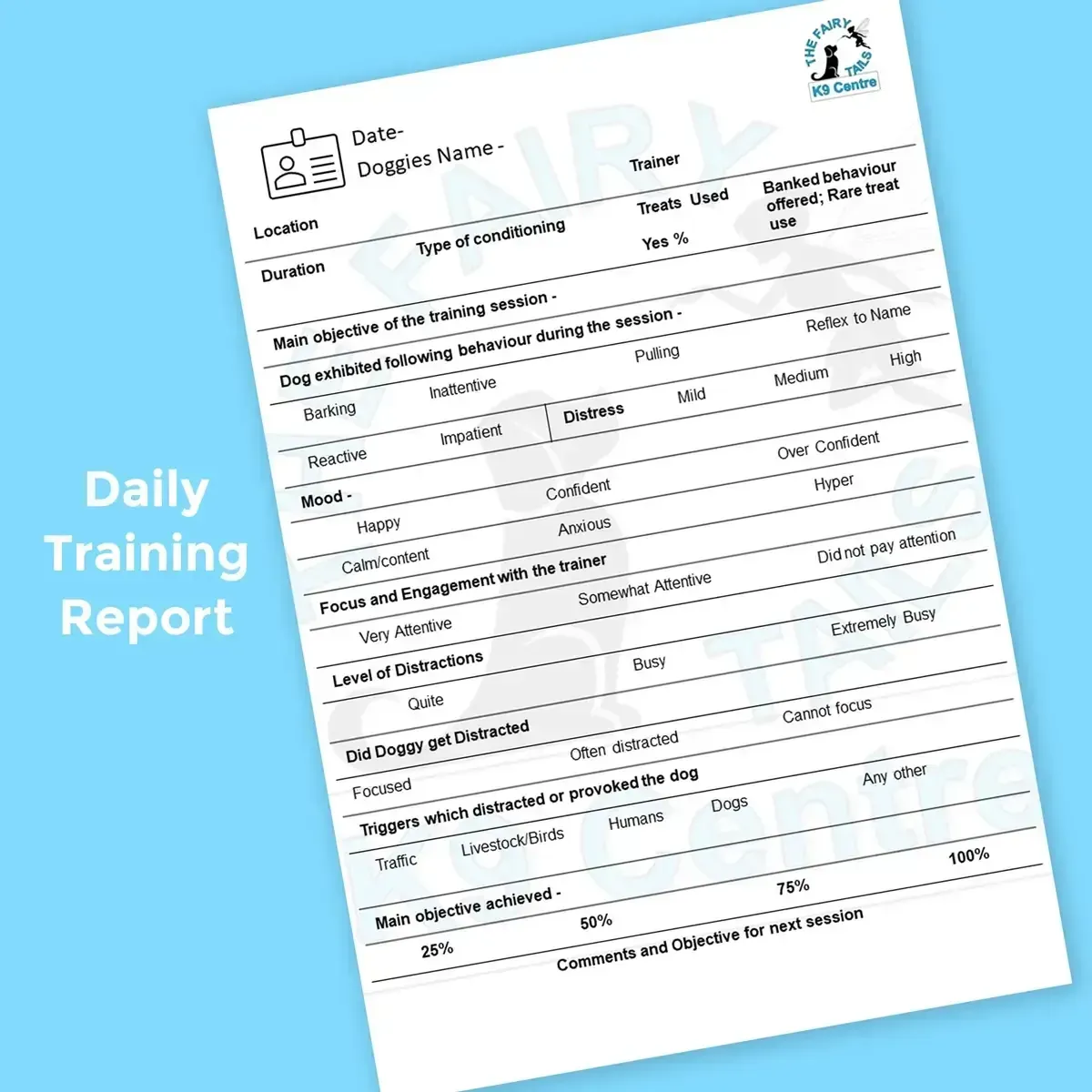
Each dog's parent receives daily training feedback to ensure the plan is working.
All our training sessions are recorded on the body cam, so you'll also receive the
recordings of each session with your daily reports. Videos are stored on OneDrive
and you'll have access to the link throughout.
A real daily report, exactly as parents receive it
What your dog needs to bring — the kit list
Here are the items your dog will need when he or she starts at the boarding school:
Puppy crate/dog crate – if your dog is trained to sleep in it or if required for training
Puppy toys/dog toys (which can be destroyed by the dog) – chew toys
Yaks Milk Chew
Pizzle sticks or other chews – such as cows' ear, pigs ear, beef tendon, chicken necks, etc.
Puppy food/dog food – with instructions
Puppy/dog bedding
Puppy/dog harness – Perfect Fit or any snug, comfortable Y-shaped harness with a front loop plus a handle on top (Ancol, Truedog, Rabbitgoo, Hurtta). Hurtta is our favourite
Walking lead – Halti lead with double clips (a normal lead with clips at either end)
3-inch carabiner pack
20 ft training lead
Vet bed
High cartilage-based chew
Prebiotic: Purina Fortiflora
Multivitamin tablets (Purina only)
Nutri Calm tablets or a prescription from your vet if your dog is nervous
Adaptil plug-in
Dog snood – for nervous dogs
Jumper – for cold weather
Any exception to the kit list must be agreed in advance with the school.
Getting started
How to book your dog in — four simple steps
1
Contact us
Send us the list of issues you’re facing — or the single biggest one you’d like us to focus on.
2
Prioritise
We put your list into priority order and send it back so we can agree what matters most, together.
3
Contract
A service contract sets out our obligations to you, and yours to us. Your dog’s issues are trained holistically and at the same time — training can’t work in isolation — while keeping the main issue in focus.
4
Agreement
You return the signed contract with the fees and registration form, and training starts on our mutually agreed date.
Let's talk
Tell us about your dog
Send us the issues you're facing — or the one big thing you'd most like us to crack —
and we'll come back to you with an honest plan.