Animal management students are kind, passionate and welfare-minded — and we love hiring them. But as an employer in the dog care sector, we keep meeting graduates who have never been taught the two things every animal job depends on: where the work really is, and the law that governs it.
Animal management courses are usually chosen by young people who genuinely love animals. That passion is valuable, and it should be encouraged.
However, as an employer, we increasingly see a gap between qualification and workplace readiness. This is not a criticism of students, and it is not a criticism of tutors, many of whom work extremely hard. The concern is structural: the way some full-time animal management qualifications are shaped does not always match the jobs that actually exist in the animal care industry — or prepare students for the legal and safety responsibilities those jobs carry.
Where the animal care jobs really are
Colleges understandably give students exposure to a wide range of areas: welfare, ethics, biology, conservation, zoology, exotics, rescue work, behaviour and husbandry. That breadth is useful, because not every student knows where they want to go.
But a large amount of student interest is directed towards conservation, zoology and zoo-based careers. These sectors deserve real respect — modern zoos and conservation organisations do important work in education, welfare and conservation. BIAZA, the British and Irish Association of Zoos and Aquariums, represents over 100 zoo and aquarium members across Britain and Ireland. That is meaningful work, but it is also a naturally limited employment route compared with the size of the wider pet care economy.
The pet sector is where the accessible, local, progressive jobs are. According to UK Pet Food’s 2026 Pet Population Survey, 62% of UK households own at least one of the country’s 36.5 million pets, including around 15.5 million dogs — and the share of households owning a dog has risen from 33% in 2021 to 41% in 2026. Every one of those animals needs grooming, supervision, enrichment, safe handling, structured exercise and professional support.
That demand translates into real careers: dog day care, boarding, grooming, dog walking, kennels, catteries, pet retail, rescue centres, training support and veterinary support roles. The National Careers Service recognises animal care work and dog grooming as established routes, with progression through apprenticeships and workplace training towards supervisory and management roles — and, eventually, business ownership.
For many young people, the first paid step into animal employment will not be a zoo. It will be a kennel, a grooming salon or a day care floor. That is not a lesser route. It is a practical, valuable and employable one — and if courses do not give it proper weight, students leave with an unrealistic picture of where their careers can begin.
The blind spot: the law that governs every dog, every day
Here is the gap that concerns us most as an employer.
We recently hosted work experience students from a local college on an animal management programme. They were bright, caring and genuinely knowledgeable about welfare — exactly what you would hope for. But when the conversation turned to keeping themselves, their colleagues and the public safe, and to the laws that govern working with dogs, it became clear that this side of the industry simply had not featured in their education. Their entire understanding of animal work was built around welfare, which matters enormously — but almost no thought had been given to human safety, or to the legislation that applies the moment you take charge of a dog.
Not one of them had been taught about the Dangerous Dogs Act in any working sense. That is not their failing. They had learned exactly what they were taught.
The Dangerous Dogs Act 1991 does not only apply to “dangerous dogs”. Under Section 3, an offence is committed if any dog, of any breed, is dangerously out of control in any place — including private property. A dog is treated as dangerously out of control whenever there are reasonable grounds to fear it will injure someone, even if no injury actually happens. Crucially for our industry, the offence applies not only to the owner but to whoever is in charge of the dog at the time. In a day care, boarding or walking setting, that is the member of staff holding the lead. Where a person is injured, the offence carries a maximum sentence of five years’ custody, alongside possible destruction orders and a criminal record. Every professional dog handler in the country works under this law, every day — yet many graduates arrive never having heard it explained.
The same is true of workplace safety law. The Health and Safety at Work etc. Act 1974 places duties on employers to protect staff and the public, and on employees to take reasonable care of themselves and others. In a dog care business, that is not paperwork — it is the difference between a safe day and a serious injury. Under the Animal Welfare (Licensing of Activities Involving Animals) Regulations 2018, day care and boarding businesses in England operate under local authority licences with detailed conditions on supervision, group management and record keeping. Staff are expected to work within those conditions from their first shift.
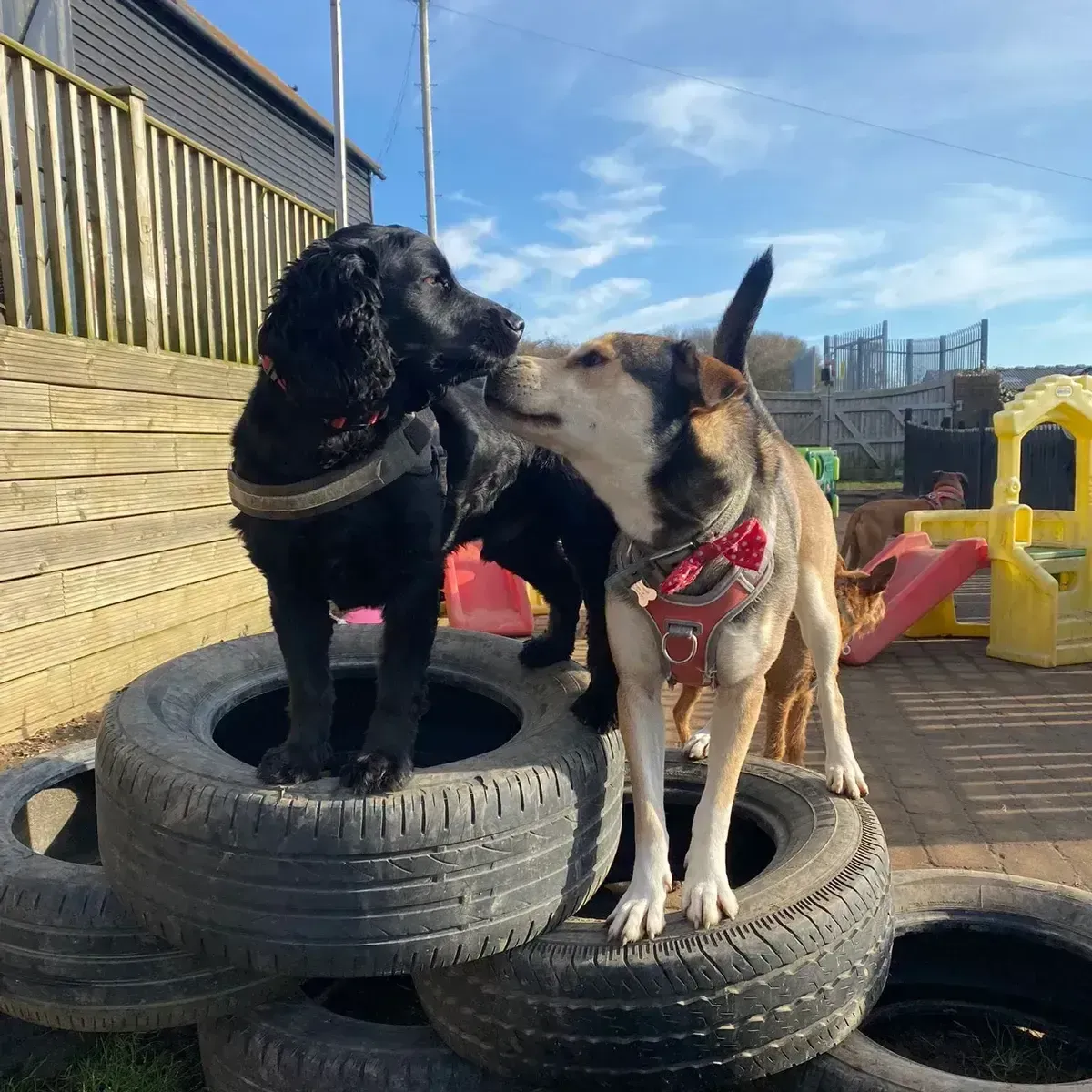
There is also a subtler problem with how risk assessment is taught. Much of it is modelled on enclosure-based settings — fixed barriers, controlled access, one species behind a door — which reflects a zoological way of thinking. A dog day care floor is nothing like that. It is an open pack environment where group composition changes through the day, arousal can move through a group of dogs in seconds, and gateways, entrances and handovers are the highest-risk moments. In that environment, an oversight in safety is not an administrative slip. A missed early warning sign can end in a dog fight, and the person most likely to be seriously hurt is the member of staff who steps in. This is why understanding body language, arousal, escalation and safe intervention is not an optional extra in our industry. Getting it wrong can mean life-changing injury — and for the dog’s handler, potentially criminal liability as well.
Welfare and safety are not competing priorities. They are the same discipline viewed from two sides: a calm, well-managed, welfare-led environment is also the safest one. But teaching one without the other sends graduates into the workplace with half the picture.
What “day-one ready” actually looks like
The most useful graduates are not the ones who can name the most species. They are the ones who can walk into a working environment and begin to contribute safely, responsibly and professionally. They do not need to be fully trained — every workplace has its own systems — but they need a foundation that makes them trainable.
Safe handling and canine communication
Repeated, supervised experience handling animals calmly, with a working knowledge of body language, stress signals, fear, frustration and over-arousal. Good handling is never about force or dominance; it is welfare, timing, patience and prevention.
Legal literacy
A working understanding of the Dangerous Dogs Act, health and safety law, and licensing conditions — what they mean in practice for the person holding the lead, and why “the dog has never done that before” is not a defence.
Risk assessment for real environments
The ability to think about risk dynamically: open groups, changing dog combinations, entrances and exits, and human behaviour — not just enclosures and barriers.
Practical care skills
Meaningful hands-on exposure to dogs, cats and common companion animals: feeding routines, cleaning protocols, enrichment, grooming basics, health checks and behavioural observation.
Welfare in commercial conditions
Understanding how welfare standards are actually maintained in busy kennels, salons, boarding and day care settings — through staffing, supervision, rest, record keeping and escalation, under time pressure and with paying clients.
Customer communication and professional habits
Most animal care jobs involve people as much as animals. Graduates need to speak confidently and respectfully with owners, report concerns clearly, and cope with the physical reality of the work: early starts, wet weather, noise, repetition and emotional resilience.
Real placements with real employers
Work experience should be structured, assessed and linked to employability — and it should include pet-sector businesses, not only specialist or aspirational settings.
A better partnership between colleges and employers
The solution is not to remove welfare, ethics, science or zoology from animal management courses. These subjects matter. The solution is balance.
Colleges should keep inspiring students, but they must also prepare them for realistic employment: building stronger links with local employers, listening to the skills gaps businesses report, and treating pet-sector pathways with the same respect as zoo or conservation routes. City & Guilds itself describes animal care qualifications as covering everything from pet shops and dog grooming to exotic animal care — the breadth exists on paper; the practical weighting needs to follow.
Employers have a part to play too. Businesses should offer meaningful placements with proper safety inductions, give honest feedback, and help shape what good work experience looks like. When a placement teaches a student how a real risk assessment works on a real day care floor, everyone benefits — the student most of all.
Our view at The Fairy Tails K9 Centre
We meet many young people who are passionate about animals, and passion is a good starting point. But the animals in our care need staff who are safe, observant, calm and welfare-led. Our clients need staff who are reliable and professional. And our industry needs young people who understand that animal care is skilled, regulated, safety-critical work — not just animal affection.
Animal management education should give students a realistic understanding of the industry they are entering: celebrating conservation and zoology, respecting the pet sector where most careers actually begin, and teaching the laws and safety practices that protect people and animals alike.
The future of animal care depends on young people being trained for the real world, not just the romantic idea of working with animals. If colleges, employers and students work more closely together, graduates will leave education with a far better chance of doing what they set out to do in the first place: building a real career that improves the lives of animals — safely.